YEONGWOL COUNTY, South Korea — As the United States wages war on Iran, it is burning through stockpiles of advanced weapons and ammunition, including Tomahawk, Patriot and Precision Strike missiles. Replacing them will require a powerful metal, tungsten, whose production and refining is dominated by China — leading the U.S. to desperately search for it elsewhere.
Subscribe to read this story ad-free
Get unlimited access to ad-free articles and exclusive content.

Tungsten is used in fighter jets, bunker buster bombs, armor-piercing rounds and missile systems, making it indispensable for national defense. But the U.S. has had no active commercial tungsten mines since 2015, and the Trump administration has made it a mission to curb dependence on the Chinese supply.
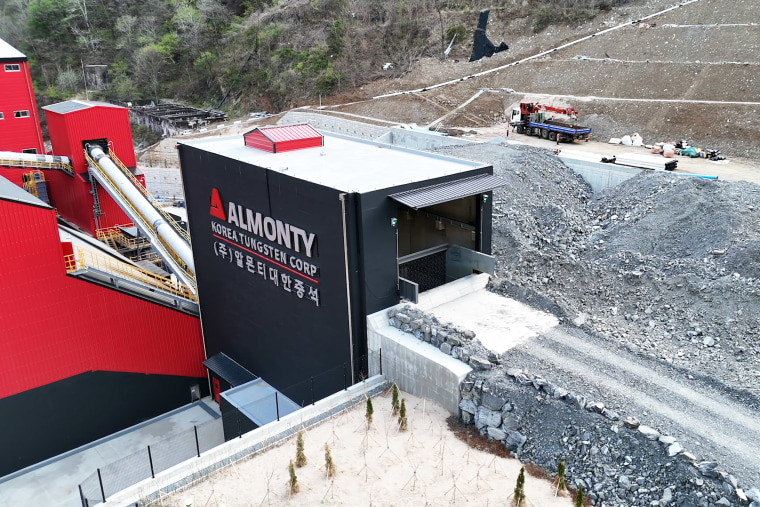
One place the metal can be found is in the mountains of eastern South Korea, at a mine owned by a U.S. company that holds millions of tons of tungsten ore.
“There are very few large-scale tungsten mines on the planet,†said Lewis Black, chief executive of Almonty Industries, which reopened the Sangdong mine in March more than 30 years after it shut down because of competition from China.
Tungsten has long been a “war metal,†Black told NBC News last month during a visit to the mine. In recent decades, it has also become a “backbone metal†in the technology sector, used in semiconductors, batteries, smartphones and more.
“The demand for tungsten is going to only increase,†said Steve Allen, Almonty's chief operating officer. “So having a resilient supply chain for tungsten is going to be extremely important over the next decade, two decades.â€
There is no substitute for tungsten, whose global supply has come under even more pressure since the U.S.-Israeli war with Iran began in February. It could take as long as four years to restore key munitions to prewar levels, which would be critical in the event of conflict with China, Mark Cancian, a senior adviser with the Center for Strategic and International Studies, said in a report last month.
The weapons shortfall also affects U.S. allies such as Japan, which relies on Tomahawk missiles, and South Korea, which hosts the THAAD missile system. The Beijing-claimed island of Taiwan is also awaiting a potential $14 billion U.S. arms package that a Trump administration said last week was on “pause†due to the Iran war.
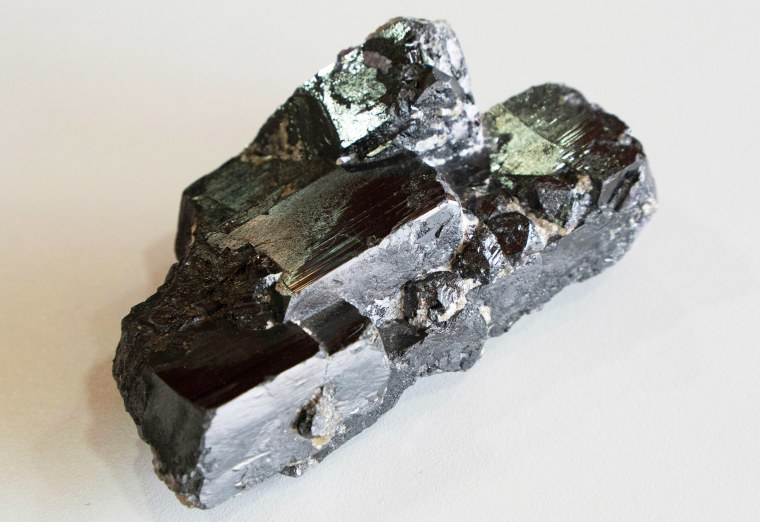
Aided by government subsidies, lower labor costs and looser regulations, China has dominated the global tungsten industry for decades, producing over 80% of the world's supply and using more than half of it. The U.S. gets much of its tungsten from recycling, as well as relying heavily on imports — more than 6,000 metric tons of processed tungsten each year, according to the U.S. Geological Survey.
Last year, amid a trade war with the U.S., China slapped export controls on about a dozen rare earths and critical minerals, including tungsten, sending prices soaring to record highs. China agreed to a tariff and rare earth truce last year that expires in November.
The highly heat-resistant metal that Black says is “as dense as gold and as delicate as porcelain†is extremely difficult to extract and process. Tungsten mines also produce hazardous waste and disrupt local ecosystems, according to researchers and environmental campaigners.
“People in America don't want to do that,†Ret. Col. Steve Warren, a senior aerospace and defense executive and former spokesperson for the Pentagon, said in an interview in Washington. “The Chinese are very willing to do that and at a low cost.â€
After lying dormant for years, the U.S. tungsten industry is in many ways starting from scratch.
“There's no knowledge. There's no consultants you can go to. There's no book you can refer to. All of that knowledge died in the '90s,†Black said.
China didn't just take market share, he said: “They also took the human capital.â€
At the Sangdong mine in South Korea, in caverns carved into the mountains, Almonty's engineers are blasting every day, finding new deposits of tungsten ore that fluoresce electric blue.
The mine, which is filled with newly installed high-tech safety features, has long been part of the local landscape and at one point was the backbone of South Korea's economy. Now that it's up and running again and tungsten is in demand, Almonty estimates the mine could continue operating for about 100 years.
At full capacity, Almonty says it will process about 1.2 million tons of tungsten ore a year at the South Korean mine. The company, which last month moved its corporate headquarters from Toronto to Dillon, Montana, for the sake of “strategic alignment†with U.S. defense interests, is also working to reopen a mine in Montana so the U.S. has a domestic supply.
“To be able to re-establish a tungsten mine in the United States is absolutely critical now and in the future,†said Steve Allen, Almonty's chief operating officer.