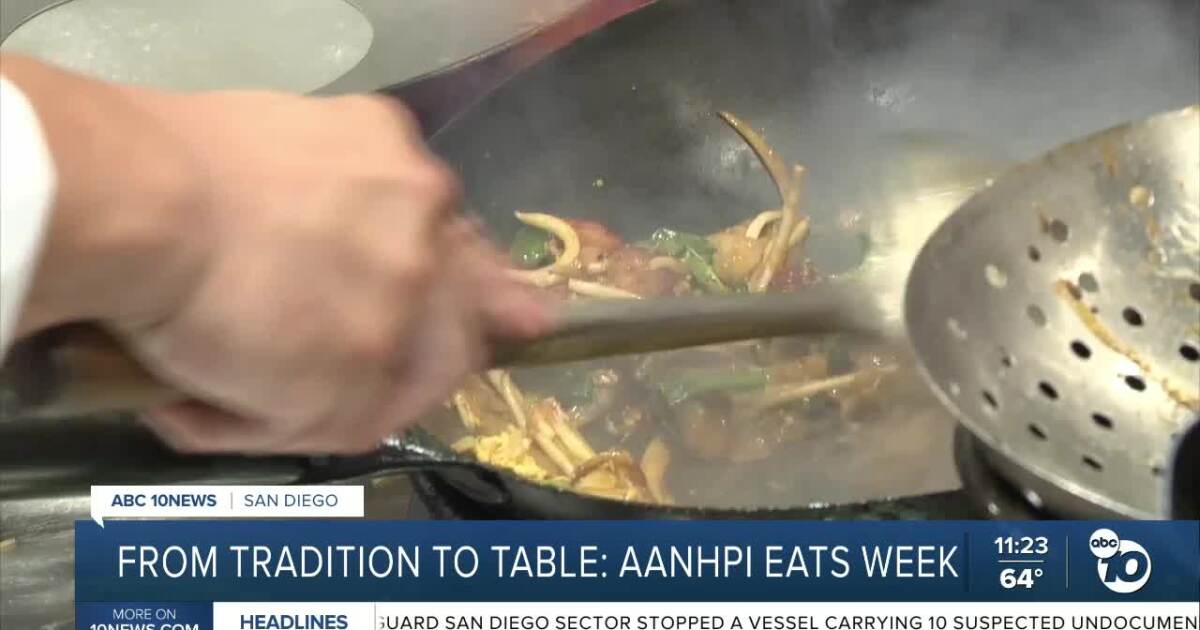
For two hours on Saturday evening, White Plaza transformed into a night market, alive with the aroma of Taiwanese food, the drumbeats of cultural arts groups and the energy of people celebrating a culture that doesn't always get to take up space.Â
The Taiwanese Cultural Society's (TCS) annual Night Market event brought together the Stanford and Bay Area community for a night reminiscent of Taiwan's cultural hubs for eats and entertainment. This year's event included student performances on the White Plaza Stage by Stanford Baipu Chinese Music Ensemble, Stanford Chang Le Dance, Stanford Lion Dance, Stanford Swingtime, Stanford Wushu and Múa Lac Hông. The night also featured local Taiwanese food vendors such as Duan's Kitchen and Queen House and activities like mahjong, carnival games and a lacquer fan workshop.Â
As the lead organizer for Night Market, TCS co-chair Colin Liu '27 was responsible for bringing these groups and vendors together. After joining TCS as a freshman, he became more heavily involved in Night Market planning as a sophomore. This year, one of TCS's goals was to provide more free activities for attendees.Â
 “People will come to Night Market to buy food, but we really want to give them a reason to stick around for longer than just getting food and eating it,†Liu said.
Compared to last year's Night Market, this year's event included more activity booths, from a Taiwanese American book display to a stand raising awareness about Asian health. Other organizations, including the Stanford Taiwanese Students' Association and the Association of Chinese Students and Scholars at Stanford, also helped staff a number of these booths.
Milian Chen '28, the co-social chair of TCS, attended last year's market and said she was inspired to help organize this year's Night Market to make sure more people on campus knew about it. A Taiwanese Canadian, Chen also helped run some activity booths to showcase her culture — including fake fishing for goldfish, which she described as a common night market activity in Taiwan.Â
“In high school, I didn't get to engage with my peers in terms of Taiwanese culture as much,†Chen said. But after attending TCS' Night Market last year, “I was really excited that this was a place where everyone gets to celebrate the fun parts about Taiwan, and just talk to each other, have fun, eat good food … get to know Taiwanese culture and participate.â€
Other booths were more educational. Jison Hong, a clinical professor of immunology and rheumatology, attended the Night Market on behalf of the Stanford Alcohol Intolerance Cancer Awareness Program. At the educational booth she hosted, Hong taught marketgoers about a mutation in the ALDH2 gene that is common among East Asians, and which causes some people to flush red when they drink alcohol.Â
“Recent studies have shown that that can be associated with an increased risk for certain types of cancers,†Hong said. “We are raising awareness because a lot of people don't know about that.â€Â
As for the student artists, prior to taking the stage, one of the choreographers for Stanford Lion Dance, second year PhD student in bioengineering Kevin Ly, said he was excited to showcase a culmination of the group's work for the past few quarters. Having also performed for Lunar New Year, Night Market was one of Lion Dance's last performances of the school year.
“First and foremost, [we hope] the community has fun, but secondly, we hope that the community realizes how vibrant Stanford culture is when we're not [focusing] on academics,†Ly said. “We take academics just as seriously as we do other parts of our lives, and we find culture is one way that we enrich ourselves, too.â€Â
Behind this showcase of culture were months of coordination and hard work. Liu described watching it all fall into place.Â
“I think awe is the right word to describe it: that it all just comes together, and there are a million things that could go wrong, but none of them go wrong because everybody shows up and does their job,†Liu said. He's become aware “that there are a lot of very valuable members of the Stanford community, of [the] Bay Area community, of the Taiwanese community who really care about this as much as I do.â€Â
Beyond any single booth or performance, the mission behind Night Market holds a broader purpose of putting Taiwan on the map for Stanford students — not just politically, but culturally.Â
“I want to provide people with a good experience,†Liu said. “ I want them to have a good time at Night Market, but simultaneously I want them to, in the process, just know that Taiwan exists.â€
According to Liu, despite the longstanding geopolitical dispute over Taiwan's status as an independent nation, “I have no expectation that anybody knows that Taiwan is different [from] China. It's very confusing on many levels, and I just want people to know it has a unique culture — it's not just part of Chinese culture; it's a very unique place with a very, very diverse culture on the island.â€
‘);