LAGOS, Nigeria — Israel and Iran exchanged strikes again on June 8 for the first time since the April fragile ceasefire.
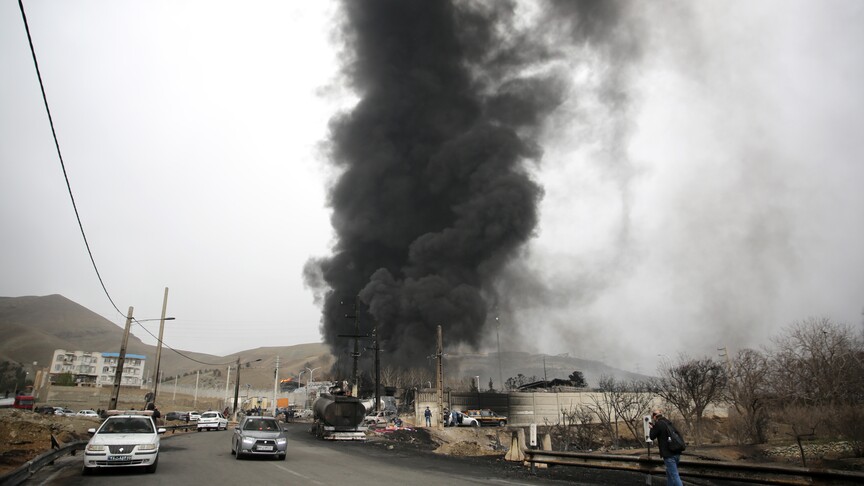
Israel hit the Karun petrochemical complex in Khuzestan, Iran, fired back at Israeli air bases, and the Houthis (an Iran-backed Shiite military group) declared a ban on Israeli shipping in the Red Sea.
As a result, the conflict in the Middle East entered a new phase. For members of the Islamic Movement of Nigeria, it was a continuation of something that had already become deeply personal.
READ: The Sunni-Shi'a Muslim Divide: Why It Matters In The Iran War
When Iran's Supreme Leader Ayatollah Ali Khamenei was killed in a joint U.S.-Israeli airstrike on his compound in Tehran on Feb. 28, and his death was confirmed by Iranian state media the following morning, members of the IMN took to the streets in cities across Nigeria within hours.
Protests were reported in Lagos, Niger, Kebbi, Kaduna, Sokoto, Kano and Yobe states, where supporters of the Shia movement marched through major streets carrying Iranian flags and chanting anti-U.S. and anti-Israel slogans. The group, led by cleric Ibrahim El-Zakzaky, said the rallies were part of an ongoing response to the escalating conflict in the Middle East.
“We held a demonstration today in Suleja,†said Adam Rogo of the IMN media unit. “Our message is clear: we condemn the attacks on Iran and reject what we describe as Israeli aggression, including its actions in Gaza.â€
Videos reviewed by the Maiduguri-based journalist showed men, women and children participating in the marches, some waving banners and images associated with Iranian leadership. In some instances, demonstrators were seen dragging US and Israeli flags along the ground.
A Spiritual authority, not just a foreign leader
Khamenei, 86, had served as Iran’s supreme leader since 1989. His death was confirmed by Iranian state media on March 1, hours after US President Donald Trump announced it, calling him “one of the most evil people in history.” His son Mojtaba Khamenei subsequently succeeded him. Iran declared 40 days of national mourning.
For IMN supporters across Nigeria, the response was immediate and visceral. In Zaria, Kano, and Abuja, supporters gathered for prayers. Others took to social media to denounce what they described as an assassination of a spiritual authority.
“This is not just about Iran,†said a movement member in Abuja, who requested anonymity for security reasons. “Khamenei was a symbol of resistance against oppression. Killing him is like declaring war on all who share that belief.â€
The IMN has maintained ideological alignment with Tehran for decades, regularly marking Iranian religious and political events with processions and lectures.
For members of the IMN, Iran represents not only a geopolitical power but also the spiritual center of Shia Islam, and actions perceived as aggression against the country are interpreted as attacks against the Shia faith itself.
Security Concerns In A Fragile Environment
In Nigeria, security analysts warned that the demonstrations could heighten tensions in an already fragile environment. Some cautioned that extremist groups, including Islamic State West Africa Province and Jama’at Nusrat al-Islam wal-Muslimin, might exploit the situation for recruitment or propaganda.
“The conflict could be used to mobilize vulnerable youths,†said a security analyst based in northern Nigeria, citing unemployment and persistent instability as underlying risk factors.
The IMN, which has faced years of restrictions by Nigerian authorities, has increasingly drawn on international developments to rally its supporters. Large gatherings were also reported in Abuja, Kano and Kaduna in the days following Khamenei’s death, prompting heightened vigilance from security agencies and foreign missions.
The U.S. State Department issued a security alert to American citizens in Nigeria, urging vigilance and anticipating possible travel disruptions.
Religious leaders, including those from Jama’atu Izalatil Bid’ah wa Iqamatus Sunnah, alongside security officials and academic experts such as Dr. Aminu Bashir of the University of Maiduguri, called for restraint, warning that rising tensions could deepen sectarian divisions if not carefully managed.
Reactions across Nigeria were mixed. While Shia adherents expressed mourning and defiance, Sunni Muslims and secular observers focused instead on the broader geopolitical risks and the possibility of further escalation in the Middle East.
Conflict not over
The Nigerian government has maintained heightened security since the March protests and warned that importing external ideological conflicts will face strict legal consequences.
Nigeria has shown no intention of expanding cooperation with Iran beyond basic diplomacy, even as Tehran has offered rhetorical support for Nigeria’s counterterrorism efforts.
For IMN communities across northern Nigeria, who have spent months mourning Khamenei and watching the conflict from afar, the renewed escalation has revived the same questions about faith, solidarity and domestic stability that the protests in March raised but did not resolve.
In Yobe State, an IMN leader, Auwal Mansur Potiskum, had described Khamenei's death as “painful but not the end,†adding that “the struggle he stood for will continue.â€
Another supporter, Ali Mustapha Mai Littafi, said the killing had strengthened rather than weakened their resolve.
This is a test of faith and commitment. What happened will not silence the movement; it will only make it stronger,†he said.
“We believe Iran is standing against oppression and foreign domination,†added Ibrahim Musa, a 32-year-old trader who joined one of the demonstrations in Kano.
As the conflict enters a new phase, that belief shows no sign of fading.
This story was reported and produced in collaboration with Egab.Â