
Pope Leo XIV called for stronger regulation and a slower pace of AI advances in a landmark theological document released Monday, warning the technology was fueling and normalizing conflict around the world.
Subscribe to read this story ad-free
Get unlimited access to ad-free articles and exclusive content.

In a sweeping and eagerly anticipated manifesto on the subject, Leo warned that artificial intelligence should not be “concentrated in the hands of only a few people.†He called for “disarming AI,†which “does not mean rejecting technology, but preventing it from dominating humanity.â€
He said that “merely regulating it is insufficient.â€
The first U.S.-born pope in history was writing in his first encyclical, a key text outlining the pontiff's view on global affairs, titled “Magnifica Humanitas†(Magnificent Humanity).
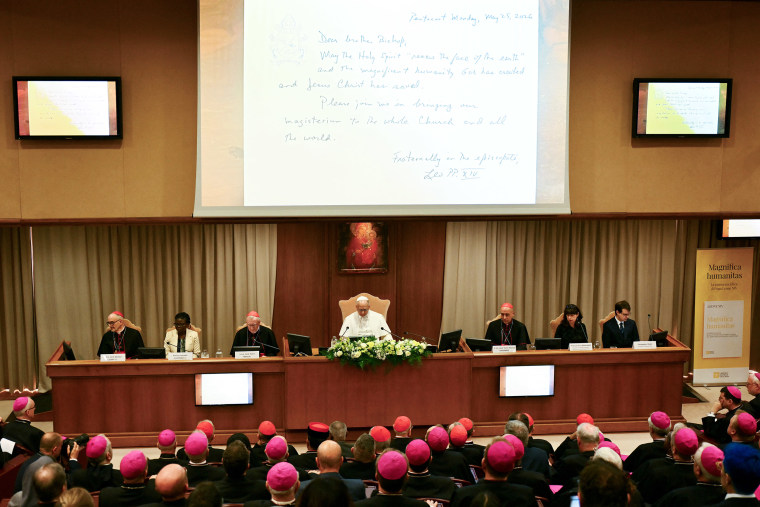
It was released alongside Christopher Olah, one of the co-founders of the AI giant Anthropic.
That poses another potential flashpoint between the Vatican and President Donald Trump, whose administration ordered all agencies to stop using Anthropic after the company refused the U.S. military unrestricted access to its technology.
Its release comes after Leo faced public attacks from Trump following his criticism of the Iran war.
During the presentation at the Vatican on Monday, Olah acknowledged that all AI labs — including his own — operate “inside a set of incentives and constraints that can sometimes conflict with doing the right thing.†That's why it's “enormously important that there be people outside those incentives†who “are paying close attention, who are willing to say hard things, who are willing to be our earnest, thoughtful, critics.â€
In a rallying cry, he added, “We need more of the world — religious communities, civil society, scholars, governments — to do what His Holiness has done here: to take this seriously, to look closely, and to push events in a better direction.â€
Though the document was published Monday, Leo signed it May 15, specifically timed to coincide with the 135th anniversary of another key document crafted by his namesake predecessor, Pope Leo XIII, in 1891.
Whereas the previous Leo focused on workers' rights in the industrial revolution, the current-day Leo wrote that “we cannot limit ourselves simply to repeating his insightful teachings.†Instead, “we must ask God for the wisdom to interpret the great trends of our time, particularly technological advances,†he said.
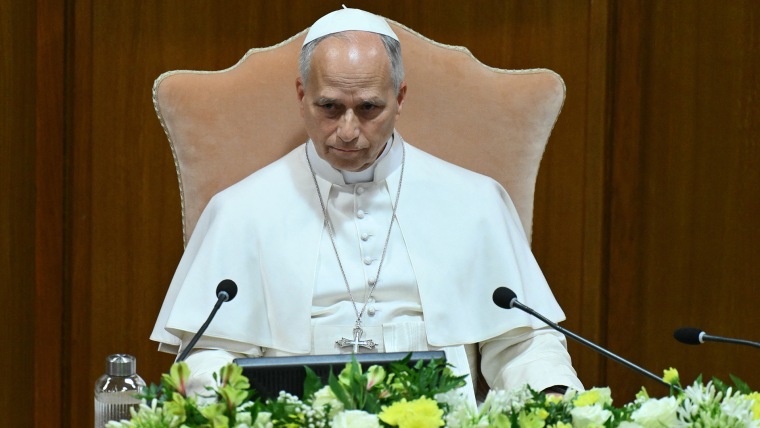
This math-grad pontiff sought to make clear he is no luddite, writing that “technology should not be considered, in itself, as a force antagonistic to humanity.â€
Rather, he warned against AI being wielded by a powerful few private interests, unchecked by governments and with the capacity to normalize war through unmanned weapons. “A more moral AI is not enough if that morality is determined by a few,†he wrote.
“Calling for prudence, rigorous evaluation and even, at times, a slower pace in adopting AI does not mean opposing progress,†the pope said in the document. “Instead, it is an exercise of responsible care for the human family.â€
Leo “has always had a passion for the sciences,†NBC News' Vatican analyst Deborah Lubov said. “He also embraces technology; it's not that he's fearful of it,†she added.
“But he realizes that artificial intelligence brings great risks†and believes there needs to be “some sort of moral compass or ethical framework,†Lubov said.
In the document, Leo lamented “the growing ease with which autonomous weapons systems can be deployed,†which he said “makes war more ‘feasible' and less subject to human control.â€
The “use of AI in warfare must be subject to the most rigorous ethical constraints, to guarantee respect for human dignity and the sanctity of life and to avoid a race to develop such arms,†he wrote. He also warned that “humanity is slipping into a violent culture of power, where peace no longer appears as a responsibility to be taken on, but as a fragile interval between conflicts.â€
“Our task today is not only ethical or technical. It is ecological in the deepest sense, for it concerns a new dimension of our common home,†Leo wrote. “AI is already an environment in which we are immersed, as well as a force with which we must engage. For this reason, merely regulating it is insufficient; it must be disarmed, welcoming and accessible.â€