What moved the needle in the global auto industry this week?
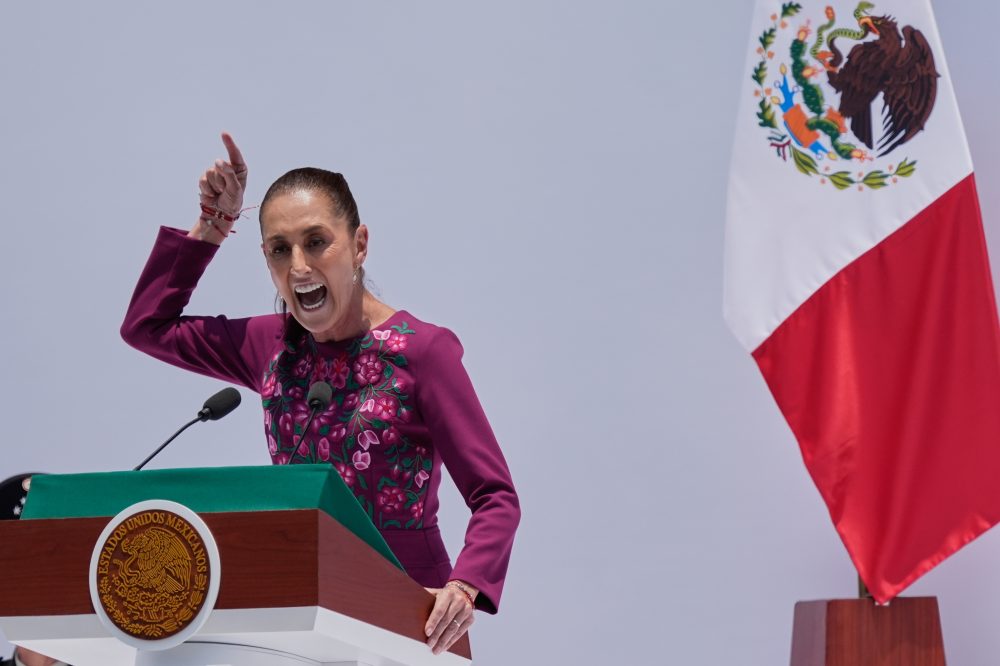
BYD, NIO, and Unitree added to US “Chinese Military Company List”
The U.S. Department of Defense recently updated its “Chinese Military Company List” (CMC), expanding it to cover 188 Chinese entities.
Compared to the 2025 version, the list has expanded significantly, adding private firms such as Alibaba, Baidu, NIO, CALB, and WuXi AppTec.

Image source: NIO
Following the news, NIO, Alibaba, Baidu, and WuXi AppTec issued statements. NIO pushed back, stating: “The company is neither a Chinese military company nor an enterprise contributing to civil-military integration for China’s national defense industrial base.”
NIO clarified that the CMC list is not a sanctions list. Restrictions on U.S. government procurement tied to the list won’t impact its operations, nor does the list restrict trading of its securities. The company plans to engage with the Department of Defense to correct the error, including taking legal action if necessary to protect the company and its shareholders.
Gasgoo Take: With the list expanding to purely private firms like Alibaba, Baidu, and NIO, procedural due process has clearly taken a backseat to administrative overreach.
Saidou Technology launches AI car brand AIVA, first model to debut this year
On the evening of June 9, Seres-affiliated Saidou Technology held a launch event in Beijing to unveil its new AI automotive brand, AIVA. The name stands for “Artificial Intelligence Voyage Ahead,” symbolizing AI that accompanies users on their journey. It also carries a phonetic nod to “love me,” reflecting a vision of using human-centric AI to address real user needs.

Image source: Saidou Technology
The AIVA Origin Concept made its debut at the event, with the first mass-production model, the AIVA ME7, set to launch later this year. The brand plans to build out a full product lineup targeting the mainstream market above 200,000 yuan.
Positioned as a crossover, the debut model will offer both pure electric and extended-range powertrain options. Priced between 100,000 and 200,000 yuan, it complements Seres’ existing AITO brand, which sits in the premium segment above 250,000 yuan. The new vehicle will be produced at Seres’ Phoenix plant and sold through independent channels in both domestic and overseas markets.
On the tech front, all AIVA models will come standard with a smart cockpit system powered by the Doubao large model. For autonomous driving, the brand will use solutions provided by DeepRoute instead of Huawei’s HarmonyOS Intelligent Mobility. This move signals a diversification of Seres’ supply chain strategy.
Gasgoo Take: Without Huawei’s traffic boost in the 100,000–200,000 yuan bracket, the brand must prove it's more than just a shell.
Chery partners with Yinwang
On June 11, Chery Automobile Co., Ltd. and Yinwang Intelligent Technology Co., Ltd. signed a strategic partnership agreement in Wuhu, Anhui. The deal focuses on deep collaboration in Level 3 conditional autonomous driving and Level 4 autonomous driving technologies.

Image source: Chery
Chery noted that the global auto industry is undergoing an AI-driven transformation, putting autonomous driving at the center of competition. For China to transition from a major automotive power to a strong one, intelligent connected vehicles are the key breakthrough. The upcoming 15th Five-Year Plan period will be critical for the deployment of L3 and L4 technologies.
Under the agreement, the two companies will accelerate technological breakthroughs and mass production for L3 and L4 driving during the 15th Five-Year Plan, aiming to bring compliant, safe, and efficient smart mobility to the masses sooner.
Gasgoo Take: To extend the life of its internal combustion engine base, partnering with Yinwang is a far safer bet than grinding out in-house R&D.
Changan Automobile puts 40% stake in Changan Ford New Energy up for sale
The Chongqing United Property Exchange recently disclosed that Changan Automobile is listing its 40% stake in Changan Ford New Energy for sale at a reserve price of 154 million yuan. Once the transaction is complete, Changan will no longer hold a direct stake in the company.
Established in September 2023, Changan Ford New Energy was 60% owned by Changan Ford and 40% by Changan Automobile. It was tasked with spearheading the joint venture’s electrification transformation.

Image source: Changan Ford
However, the company’s core business has effectively ground to a halt. Data shows that in 2025, revenue reached 913 million yuan, with a net profit of 527.5 billion yuan. By the first four months of 2026, however, revenue had plummeted to -102,900 yuan, and net profit stood at 1.2562 million yuan. Operating profit was listed as “business unable to provide.” Since October 1, 2025, the company has ceased handling Ford brand vehicle and after-sales operations, with no plans to resume such core business.
Gasgoo Take: The phrase “negative revenue, business unable to provide” is blunt enough on its own.
BYD’s Hungary plant to begin production in Q4
In a June 9 interview with Reuters, BYD Executive Vice President Stella Li said the company’s new Hungarian plant will start vehicle assembly in the fourth quarter of this year. She added that the Hungary project is currently the company’s top priority, with the next phase focused on scouting a second European production base.
Production at the Hungarian plant has been delayed by about a year from the original schedule. Last September, Li indicated that BYD’s first European factory in Szeged, southern Hungary, was originally slated to begin producing the Dolphin Surf compact EV by the end of 2025. Li revealed that the facility is currently still installing equipment.
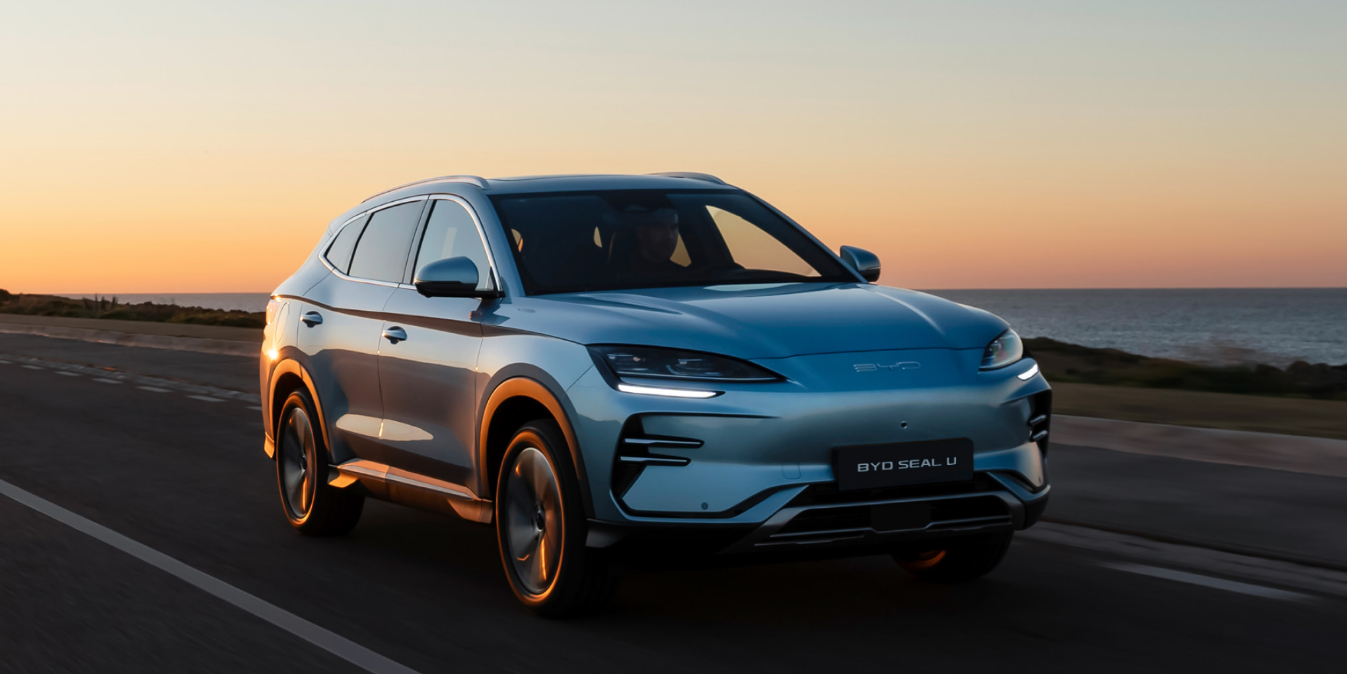
Image source: BYD
Li also noted that BYD has paused its Turkish factory project to focus on local European manufacturing. In 2024, the automaker announced plans to invest $1 billion in a new Turkish plant aimed at starting production this year. However, Li stated that construction in Turkey hasn’t begun, the project is currently on hold, and no timeline for its launch has been set.
Gasgoo Take: The real challenge for European factories isn’t building cars—it’s unions, environmental assessments, and geopolitics. Securing a “Made in Europe” label is the toughest way to break through tariff barriers.
Dana to acquire Eaton’s mobility business
On June 11, Eaton announced it has agreed to merge its mobility business with Dana Corporation. The combined entity, including debt, is valued at approximately $10 billion.
Eaton stated that spinning off the mobility unit will allow it to focus on its electrical and aerospace businesses, both of which are currently benefiting from industry tailwinds like the expansion of data centers driven by artificial intelligence.
Dana said the integration will combine Eaton’s commercial vehicle transmissions, engines, and emissions products with its own powertrain, thermal management, and sealing technologies. Dana expects the deal to generate $250 million in cost synergies.
Eaton shareholders will own slightly more than half of the combined company, with Dana shareholders holding the remainder. Eaton will also receive a cash distribution of approximately $1.1 billion, subject to adjustment based on final terms.
Gasgoo Take: Traditional Tier 1 suppliers are banding together to survive, while Eaton sheds non-core assets to pivot toward high-growth AI and aerospace sectors.