California has the largest Native American population in the country, with more than 700,000 people and over a hundred federally-recognized tribes calling the Golden State home.
And for decades, efforts have been underway to develop a new space to highlight the experience and culture of Native people on their own terms.
In April Governor Gavin Newsom, in collaboration with tribes, broke ground on the California Indian Heritage Center. Located in West Sacramento, the new center looks to preserve the history of Indigenous people in the state for future generations, while also serving as a space for education and cultural exchanges.
Secretary Christina Snider-Ashtari leads the Governor's Office of Tribal Affairs, and is a member of the Dry Creek Rancheria Band of Pomo Indians. She spoke with Insight Host Vicki Gonzalez about how this new center came to be, and what it means for California's Native and non-Native residents.
This interview has been edited for length and clarity.
Interview highlights
The Office of Tribal Affairs is pretty new. Tell us a little bit about what it does?
The Office of Tribal Affairs [was] established a few years ago within the governor’s office, and originally it was the Office of the Tribal Advisor. In both roles it basically advises the governor on all things tribal, all things Native American, all things Indigenous — those are different things throughout the state. When I talk about all things tribal, we talk about the federally-recognized governments throughout the state… we've got 109. All distinct jurisdictions, and they all have their own laws, their own processes for elections, their own processes for figuring out what their policy priorities are.Â
The governor has a relationship with each one of those tribes. We meet with them every year. And we pivot and iterate on how we move forward on policy based on those discussions and those consultations.Â
Why are you so passionate about this work?
I’ve got a personal tie. I grew up in the Los Angeles area, [and] we didn’t really learn about California tribes growing up. It’s a very hard thing when you grow up as a California Indian person in California, at least in the 90s, because you’re learning about all of these people, all these cultures. It’s one of the most diverse places in the world… and you never really learn about your own people, or the people of that place.Â
We would learn about the Trail of Tears, for example. Awful thing to happen, significant piece of history in the United States, but we had multiple Trails of Tears that happened in California and a lot of them happened at the creation of the state. To me, growing up it felt like there was kind of this massive space where we should be learning a lot more about Native people here. And working in my career in law and policy, it also felt like we couldn’t really be as effective as we wanted to be because nobody even knew we existed.Â
They didn’t know the nuance and the diversity of California Indian people, and why there are differences in statuses, in how well tribes are doing today. To me this work has felt like a labor of love; of wanting people to learn more about the unique diverse cultures that are so foundational to this place. Embrace those cultures as the first cultures of this place, and really take a burden off of California Native people to have to tell those stories themselves, or tell those stories and have people understand and embrace those stories.Â
Tell us a little bit about the California Indian Heritage Center. Where did the idea first come from?Â
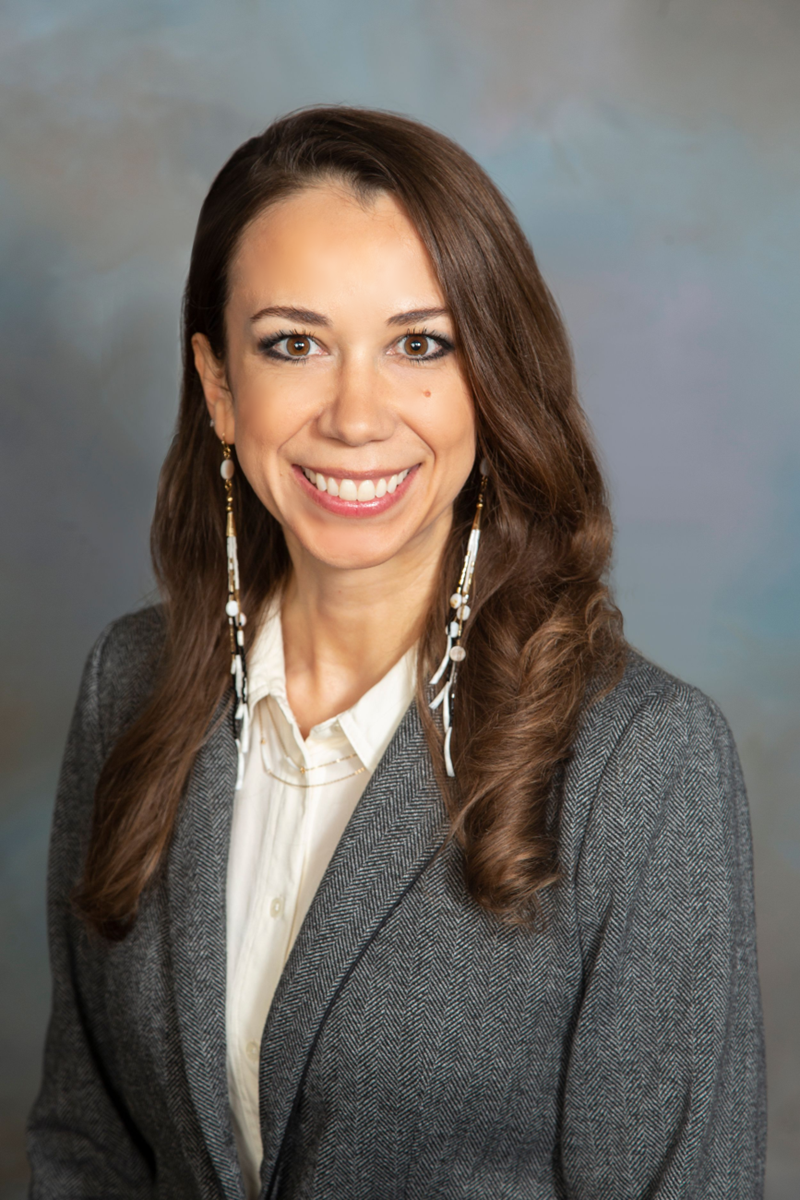 Christina Snider-Ashtari is the Secretary of the Governor’s Office of Tribal Affairs.Courtesy of the Governor’s Office of Tribal Affairs
It actually first came about almost 100 years ago. It's very much tied to this history of Native American remains and artifacts. What had happened in the early 1900s was California State Parks had a sizable collection of Native American remains and artifacts [that was donated.] State Parks, UCs and CSUs, everybody who’s now on blast for not repatriating these items, would take these items as caretakers. Typically it would be from amateur collectors who would just pick things up, either they were taking them in a bad way or they were collecting and not figuring out where they were from.
At the time the concept of a state Indian museum came about more in a kind of “colonizer learning about a dying culture way†versus celebrating a living culture that is embracing its history, its ancestors, and wanting to tell you more about who we are in the modern era. Fast forward, we have a State Indian Museum that was established at Sutter’s Fort. If you go there, Native people have actually kind of embraced it as our own. We just had the honoring of elders celebration there… and elders come from throughout the state. But it’s really kind of an ugly place to honor Native people; it’s a very small building if you want to celebrate and convene in a place like that.
So in the early 2000s there was some funding put into figuring out a center that could actually celebrate Native people. Where any of these collections that felt like they needed to be displayed could be there. That Native people could access this place and really express who Native people are in their own words and stories. That effort resulted in a master plan and a business plan. It’s been a long time coming; a lot of people have spent a lot of their lives working on this.
This new center is going to be a lot larger than the State Indian Museum; it's a 51-acre property at the confluence of the American and Sacramento Rivers in West Sacramento. Help us visualize what people will be taking in there?
If you go to that site, you can look out at the confluence and actually see where the rivers come together. It’s a really interesting visual. I think it's a really nice representation of what this will be; it’s meant to be a lot of outdoor spaces, trails, seasonal outdoor classrooms and places where outdoor Native games can be played, where ceremony can happen. But then also an indoor facility that feels Native and also welcoming.
We did a very big public engagement process, tribal consultation process, over the past few years, and really redesigned what this would look like based on climate change, actually. The flood zone — it's not a 100-year flood zone anymore, it's much more frequent than that. Originally in that early-2000 effort a lot of the physical features were on that potentially wet side of the levee on that site. The reinvisioned Indian Heritage Center has a lot of the physical features on the dry side of the levee, or level to the levee.Â
Basically you'll come in from West Sacramento; you'll be welcomed into a welcome area that we’re in consultation with the local tribes on right now — that will actually have a ribbon cutting later this year. You’ll go into the facility, into the places where either Native people are hosting things and teaching you about their own practices, or where there’s items that we’ve consulted with them to be able to display. Really handing the keys back to Native people to tell their own stories on their own terms.
It sounds beautiful. When is it expected to be finished?Â
We’re approaching it in a phased process and so the groundbreaking for this year was for the welcome area. That will feature a gathering place, a gathering amphitheater. We'll also have the welcome-to place from the local Native tribes, and also trail features so that that site is really much more usable.Â
The next phases are more building phases, and those are in process [and] will take several years. I anticipate within the next — let's be optimistic — five years we'll have a center up and running that is run by, and primarily for, Native people, but for the benefit of all people who come to Sacramento.Â
The wheels are really starting to move. What does this moment mean for you?
I think we’re at this time of amazing movement in general. This year a lot of things that we had hoped for are actually materializing. To me it feels like in this work you have a lot of people making promises, and a lot of times it's like a headline… and five years later it never really comes to anything, or someone else takes it out.
Actually breaking ground, having a physical place that people can see there's actual movement happening, it feels from the state perspective that we're making real those promises and demonstrating to the public that the things we have been doing are actually going to bear fruit.
And from the native perspective, I think when you’re working for this state there’s always this challenge of, “is this real? Am I doing it? Are people just patting me on the head and telling me I’m doing it?†So it actually happening feels like everybody is moving in the right direction now.
CapRadio provides a trusted source of news because of you. Â As a nonprofit organization, donations from people like you sustain the journalism that allows us to discover stories that are important to our audience. If you believe in what we do and support our mission, please donate today.
Donate Today