Penn State was built on the original homelands of many Indigenous communities. Now, a student organization is working to build and maintain an Indigenous presence on campus.
In 1970, the American Indian Leadership Program (AILP) was founded to support Penn State graduate students teaching or administrating schools serving Indigenous students — the first and most successful program of its kind. It put Penn State at the forefront of support for Indigenous people, but after 40 years and supporting over 220 graduate students, it abruptly ended in 2010.
For nearly a decade, there were no Indigenous organizations on campus. That was, until Tim Benally, a student from the Navajo reservation, founded the Indigenous Peoples' Students Association (IPSA) in 2019.
Now, IPSA's roots stretch throughout campus. In collaboration with Penn State's Student Farm, it created the Indigenous Student Garden. Within the garden, there's a Gete Okosomin squash seed brought from the University of Iowa.
This large, orange squash is historically important to Indigenous people and will only grow when the soil nutrients and conditions are balanced, according to Tracy Peterson, IPSA's advisor.
He said because Indigenous students and programs here were tied to that seed, it's a reflection of their Indigenous epistemologies, and how positive growth can occur in any environment.
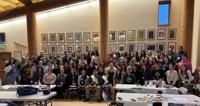
The Indigenous Peoples' Students Association and students from other Big Ten schools pose for a photo at the conference for the Big Ten Native Alliance at Oregon State University.Â
“It wasn't a matter of if it would take; it was a matter of how big that squash would grow,†Peterson said. “If these squash grow big, then IPSA, in that comparison, will do fine, and the organization will grow.â€
Penn State's history with the AILP established the conditions for a successful Indigenous program decades ago and, in turn, Penn State can serve as a conduit for the growth of new organizations like IPSA, according to Peterson.
The organization hosts soup dinners with the Student Farm, with many of the soups made from the squashes it grows. Additionally, an annual harvest feast is held in conjunction with the Student Farm and the Indigenous Faculty and Staff Alliance, which includes food from different tribal nations represented at Penn State.
Sienna Strong-Jones, IPSA's vice president, said its mission is to foster academic success for Indigenous students and allies. As such, IPSA engages in cultural activities to promote awareness about the Indigenous community and its history.
“We are a tiny but mighty club here at Penn State,†Strong-Jones, a fifth-year graduate student studying human development and family studies, said. “This has been a great opportunity to really get back to my roots.â€
Strong-Jones said this is especially important at Penn State, which sits on the original homelands of many Indigenous communities.
“There’s very little representation, unfortunately, and we’re hoping to change that. And, with our club, be able to bring in even more Indigenous students and scholars as well,†Strong-Jones said.
IPSA hosts monthly beading workshops at its space on the third floor of the HUB-Robeson Center. This is its longest-running cultural event and allows Indigenous students from various backgrounds to stay connected to their culture.
Beading is historically significant to Indigenous groups, dating back millennia, and is used to express stories, traditions and identity. The practice involves threading small beads into intricate patterns, often sewn onto clothing, bags and ceremonial objects. Designs and color choices vary by tribe and carry specific cultural meaning.
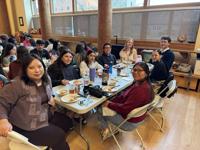
The Indigenous Peoples' Students Association participate in a salmon-bake at the conference for the Big Ten Native Alliance at Oregon State University.Â
“It’s actually very calming to do, and once you get the hang of it, it’s really fun,†Laenee McCoy, IPSA's treasurer, said. “We have every bead color known to man, so you are bound to make something cool.â€
McCoy, a third-year studying anthropology and art history, said it's important to learn about Indigenous cultures because they're still here. She added that since the Penn State community is on their ancestral land, more people should respect their “vibrant†culture. Despite not being Indigenous herself, McCoy said having presence as an ally is important.
From April 16 to 18, IPSA traveled to Oregon State University for a conference with the Big Ten Native Alliance. This event was held for schools to gather and discuss what Indigenous clubs are doing on campus to provide resources for Indigenous students.
“It’s just a really good learning opportunity, and also just nice to meet other Indigenous students from different schools,†Ayla Orona, IPSA's president, said.

The Indigenous Peoples' Students Association and students from other Big Ten schools pose for a photo while playing lacrosse at the conference for the Big Ten Native Alliance at Oregon State University.Â
Orona, a third-year studying data sciences, said the students played lacrosse, which is originally an Indigenous sport. She said it was cool to learn the history of lacrosse and the traditional rules of the game, as well as play with traditional sticks.
The group also took part in a salmon-bake, building a handmade fire pit to cook the fish both underground throughout the day and on sticks above the fire — the traditional style of baking salmon.
“It was delicious,†said Orona. “We also just had a lot of fun exploring campus as a club … it was filled with fun activities and also fun conversations from other schools.â€
But Orona said she noticed Penn State differs from other Big Ten schools in regards to the amount of scholarships they offer Indigenous students. She said other schools have a greater understanding about the situations of Indigenous students coming from reservations, and Penn State doesn't yet.
“Penn State definitely can, I believe, up their game a little bit. But we are still growing, and we're growing very fast,†said Orona. “It's just a matter of taking those ideas from those schools and really pushing it to Penn State to really grow.â€
MORE CAMPUS CONTENT
I'm a resident assistant on campus, so I'm familiar with the emotions of transitioning colle…