Placed on a table in the back corner of a Spokane antique store, it was so inconspicuous we almost didn't notice it.Â
No more than 6 inches long with a faded black cover and a strip of silver duct tape holding the spine together, the book's title was barely legible: Sanseido's New Concise English-Japanese Dictionary.Â
As a self-taught casual learner of Japanese, my interest was immediately piqued as my partner, Will, picked up the pocket-size tome. Flipping open the cover, we saw its original owner's name carefully written in uppercase: I. SAKODA. In a combination of ink and pencil beneath the name was the following:
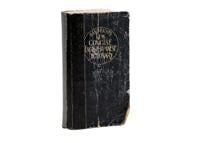
This $5 dictionary lived a long and storied life before it fell into my hands.
21-4-A
C.2.74.
Hunt, Idaho
No. 11663
Turning to the title page, it bore a stamped abbreviation: W.C.C.A.
My thoughts racing, I immediately had the sense we'd come across something with a long thread of history attached. Hunt is the nearest south-central Idaho town to Minidoka, the World War II detention camp where some 13,000 Japanese Americans were forcibly imprisoned by the U.S. government after the Dec. 7, 1941, attack on Pearl Harbor. Nationwide, more than 120,000 Japanese Americans were interned at such camps.Â
For the low price of $5, the little piece of history became ours. And starting later that night, Will and I began piecing together the well-worn dictionary's journey from I. Sakoda's hands to the North Monroe Street antique shop where it eventually landed, Tossed & Found.
RUNS IN THE FAMILY
Beyond a natural curiosity to learn the history behind interesting vintage and antique finds I've personally collected from local shops over the years (the thrill of finding yourself on the right research track is unmatched), a sentimentality for “old things†was nurtured from a young age largely by my paternal grandmother.
Born in 1930, the youngest of six, by the time Juanita Keithley Scott reached her senior years, she and my grandfather, Robert “Bob†Scott (Papa to us grandkids), had amassed a lifetime's worth of belongings in their rural home northwest of Spokane. They weren't hoarders, but growing up during both the Great Depression and World War II made the scarcity mindset hard to shake.Â
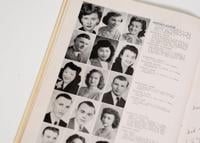
My grandmother — that's her in the top left corner — was yearbook editor during her senior year (1946-47) at Brighton High School in Colorado. It's one of my most treasured heirlooms passed down from her.
As kids, we were used to hearing Gramma tell us “this will someday be passed down to you,†a promise that proved true after she died in December 2006, followed by Papa in 2009.Â
Today my most treasured Scott family effects include a 1946-1947 yearbook from Colorado's Brighton High School, which Gramma was the editor of during her senior year, along with a stack of aged yellow school newspapers that she contributed to as part of the staff. (As editor of both my own high school annual and newspaper, these keepsakes were naturally designated to go to me.) I also inherited a beautiful formal dress she sewed for herself in 1954, which I wore to a homecoming dance, plus stacks of black-and-white photos, more of her clothing and jewelry, and many other small effects.
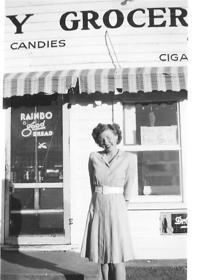
Juanita Keithley outside her family's grocery store in Henderson, Colorado, circa 1946-47.
Like most people's family heirlooms, these historical treasures are carefully stored away in tote bins and boxes. They're only periodically revisited, usually as a welcome distraction during a home reorganization session that's probably arisen because I'm feeling overwhelmed by the sheer amount of “stuff†I'm holding on to. This stash includes numerous pieces of my own life's history, ranging from the elaborate scrapbooks I carefully collaged with photos and stickers during the early-2000s scrapbooking boom, to angst-filled teen journals and a selection of favorite childhood stuffed animals.
Recently, though, a nagging thought keeps popping up in my head: Where will all these priceless personal artifacts go when my own time is up?Â
I have no children. Neither do my two siblings. As far as shepherding the Scott family's legacy into the future, that responsibility could fall to our cousin's 6-year-old daughter. But there's no guarantee she'll have any interest or the means to do so once she reaches adulthood.
Are my Gramma's dresses, newspapers and yearbook (and my scrapbooks) destined for a similar fate as I. Sakoda's wartime dictionary, tucked away in the corner of an antique store? Or worse… the trash?
HOLDING ON, LETTING GO
Since opening her antique store nine years ago, Gina Campbell has become a master at moderating the delicate mental and emotional dance around heirlooms and old objects.
As owner of 1889 Salvage Co., another of Spokane's North Monroe Business District's vintage and antique shops, Campbell encounters folks almost every day who are struggling to decide whether they want to keep or pass on something that's been in their family for generations.
“I began to realize that there was a certain amount of finesse in working with people,†she says. “I don't want someone to give up stuff they're not ready to give up.â€
If she senses even the slightest emotion or hesitation when someone comes to her store or reaches out because they're going through a deceased relative's belongings, she encourages people to give themselves more time to think it all over, especially if that family member recently passed away.Â
“There are also cultural and demographic layers†to consider, she continues. “Way back before things were so readily available, you bought the best thing that you could afford and then you fixed it. So these things were carried down through families, and I try to respect that.â€
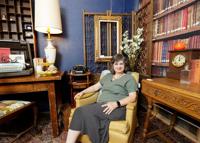
1889 Salvage Co. owner Gina Campbell tells people not to rush the process when sorting through family heirlooms.
Campbell says she frequently sees this struggle in people who, like me, were told all their life that certain heirlooms would one day be theirs. Yet in many cases, especially with younger generations that perhaps lean more toward minimalism, these meaningful objects can also feel like a burden to a family's descendants.
“I remember having a conversation with a gal, and she wasn't quite ready, I could tell, but she really didn't want all this stuff,†Campbell recalls. “So I just began to talk to her — ‘What do you feel like?' I think you have to understand what is going to be lost to you when this thing is gone. And you kind of have to decide, is it this thing, or is it the memories attached to it? And, would they want you to give up space, which equals sanity and/or calm, in order for you to keep ahold of this?â€
Another tip she tells people at any stage of the culling process is to take photos of things. Doing so helps separate a physical item from the memories that might be tied to it, like a set of china that was brought out for holiday dinners but feels impractical to store or continue using.
And when someone is ready to move on, Campbell and 1889 Salvage Co.'s other vendors are more than happy to help find a loving and appreciative new home for people's once-cherished items. The store sells everything from well-built antique furniture to artwork, home decor, knicknacks, jewelry, clothing, books and more.Â
“Say I take your great aunt's vase,†she says as an example. “I buy it, I display it, and then somebody else is going to choose it. And it lives on.â€
Estate sale company owner Molly Cole also sees these dynamics play out each time she's contacted by a family faced with cleaning out a deceased relative's home.Â
Cole has owned Spokane-based Audri's Attic since 2023, when she and her late mother, Julie Ottmar, purchased the business from its founder, Audri Crawford.
“There's always hard conversations,†Cole says.
People tend to overvalue things, she explains, especially large pieces of heirloom-quality furniture like china cabinets and items that were originally marketed as collectibles (e.g. Beanie Babies).Â
Using a china cabinet as an example, she says, “I might get $200 for it if I'm lucky, or it might go to Goodwill. So it's kind of remembering to educate people on who the buyers are. It's a hard conversation sometimes when people are told their whole lives ‘this is worth so many dollars,' and it really isn't.â€
During her time in the business so far, Cole has seen it all. Her experiences range from high-value estates netting $60,000 by the end of a weekend-long sale to those of people who died yet none of their living relatives wanted to sort through the belongings before the sale to claim personal effects like family photo albums.Â
A large number of shoppers at Audri's sales are owners of or vendors at some of the dozens of antique and vintage stores around the Inland Northwest.Â
“We tell our clients that we're really trying to get things into the hands of someone who's gonna love it, whether it's a reseller†or any other shopper, Cole says. “A lot of [resellers] come to my sales and they clean the pieces and put a pretty tag on it. They label it correctly and then put it on the shelf for twice the price. But that's like [supporting] their mortgage payment. People hate on resellers, but they're out here digging and standing in line at 5 am to find those things so that we can go buy them when they're all pretty in an antique shop.â€
At the end of each sale, most of Cole's clients opt for her staff to get rid of anything that's left — usually not much, she says — whether that's donating items to a local nonprofit or taking them to the dump. (Cole is also a real estate agent and often even sells the home for her clients.)
“Hopefully we find it a good home where it's going to be loved and cherished,†she says.
And while it may be hard for us sentimental types to stomach, when deeply personal effects like photo albums, film reels or video cassettes aren't purchased, they do end up destined for disposal, she says.
FINDING I. SAKODA
Historical records of the Japanese American internment during World War II are fortunately abundant in this digital age. So after returning home from our vintage shopping outing on a Saturday early last December, Will and I hopped online and began researching the pocket dictionary's journey to Spokane.
Our efforts proved exceptionally fruitful. Searching the Densho Encyclopedia, a rich repository of historical information on the Japanese American experience during the war, we immediately found a registry entry for an Ittoku Sakoda, who arrived at Minidoka on Aug. 30, 1942. One of those notations inside the front cover? That was his War Relocation Authority assigned family number, 11663. The W.C.C.A. (Wartime Civil Control Administration) stamp on the title page indicates the dictionary was inspected and allowed in the camp as approved literature, which included Japanese-English and English-Japanese dictionaries.Â
We also discovered that Ittoku, who was 55 at the time, was forced to the camp from his home in Seattle along with his 21-year-old son, Shigeru Sakoda.Â
Records show the elder Sakoda remained at Minidoka for the remainder of the war, departing over three years later on Sept. 11, 1945, just nine days after Japan's surrender. He then returned to Seattle.
“We should try and track down his family and see if they want this back,†I remember telling Will, thinking that perhaps the book had been mistakenly separated from the family at some point.
Or, we could maybe see if there's a museum or historical group that would be interested in safeguarding the dictionary, considering its historical ties?
Additional web searches that night in digital newspaper archives led us closer to making a real-life connection with the Sakoda family. Ittoku's descendants, we found, seemed to still be living in the Seattle area.Â
Of all the various old things I've been drawn to while browsing antique and vintage stores over the years, this was the closest I'd ever been to tracing an object's true historical past. It was thrilling.
Unlike Ittoku's well-used English-Japanese dictionary (a 1938 edition), the corners of its thin pages softened and curled with wear, the histories of most antique items since parted from their owners usually remains a complete mystery. The small book put me on a concrete path to its former family, but usually the best I can do is merely imagine the lives touched by some of the antique items I encounter.
Take, for example, a little toy cat pieced together out of cotton and wool scraps with two dull mother-of-pearl buttons for its eyes. I paid $10 for it at an antique store in Sandpoint about five years ago after being emotionally pulled toward the obviously well-loved children's toy. It was almost certainly handmade by its owner, and possibly dates to the Depression based on materials and construction.
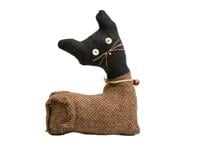
The history of this handmade toy cat is a mystery, but that's also part of its charm.
Or an Art Deco-style paper photo album filled with prints from the 1930s and '40s that I came across (but didn't purchase) at Market Street Antiques in Hillyard. While some of the candid photographs documenting vacations to places like Yellowstone and California's redwood forests — alongside sweet moments with friends, family and even beloved pets — were captioned with first names or playful descriptions, the identities of its subjects were otherwise nearly impossible to trace.
Another striking example is a pale pink blouse covered in autographs that I bought from an online vintage clothing vendor based in North Carolina. On the back, just below the collar, in 1-inch letters is handwritten “ALCOA Trentwood.†Most of the signatures in ink pen also note the signees' hometowns, including Post Falls, Spokane, Veradale and Otis Orchards.Â
While my past research into the piece at the Spokane Valley Heritage Museum confirmed some of those people were World War II-era employees of the aluminum plant (now Kaiser) that was crucial to the U.S. war efforts, the fact that its owner's name wouldn't be among those coworker signatures makes it impossible to know who she was. It's possible she asked them to sign the blouse as a memento before she ended her employment there for some reason, perhaps marriage?
I have another vintage signature jacket in my personal collection. A trend popular during the 1930s and '40s, high schoolers would ask their friends to sign a shirt or jacket and then embroider over classmates' names in colorful thread to preserve their youthful memories. The particular jacket I have came with some provenance thanks to consideration by its Seattle seller, so I do know its original owner's name, Nancy “Nan†Hall Burroughs, and that she attended Washburn High School in Minneapolis. Tracking down more about her life, however, has proven a bit challenging. (I'd especially love to find a photo of her from the time she had the jacket signed, if any of her relatives are reading this…)
For collectors, the mystery of an object's past is a major reason we're drawn to these things in the first place. But just because something is old, of course, doesn't mean it's inherently valuable, or belongs in a museum.Â
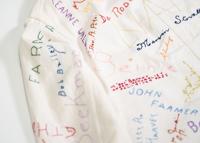
Nancy Hall Burrough's 1930s signature jacket.
THE IMPORTANCE OF PROVENANCE
For most museums to accept an item into their permanent collection, especially when it comes to historic artifacts, knowing who made it, owned it and/or used it, as well as when and where — all details of an item's provenance — is crucial.Â
“Museums often don't want something just because it's a pretty thing, but that story is what makes it stronger,†says Brooke Shelman Wagner, collections curator at Spokane's Northwest Museum of Arts and Culture, or the MAC.Â
“But that's not always been the case. We've been around for over a hundred years, and there was a time in our history where we collected, like, ‘Oh here's a pretty cup. Who used it? I don't know, but it's beautiful, so we'll collect it because it shows an example of this era or something like that,'†she continues. “I think a lot of museums are trying to lean away from that and more toward something that's exhibitable — something that has a story.â€
Wagner says the MAC receives an average of three to five inquiries a week via email from people potentially interested in donating objects to its permanent collection, which covers everything from fine art to regional history, as well as the largest collection of Plateau Indian art and artifacts in the world.Â
“It can be things like ‘I have this art by this artist' or ‘I have my grandma's old quilt.' It's so many different things,†Wagner says. “It's up to us to figure out who should respond and also, you know, we don't have a ton of space, so it's a balancing act.â€
Most of these public inquiries come as people are cleaning out a relative's home or their own, she says, versus someone coming across something incredible in an antique store. (The latter is rare, but it does happen.)
The items she and her team decide to accept into the MAC's permanent collection usually complement existing pieces or help to tell a specific story about a time in history that fits with the museum's mission and focus. The goal, after all, is to occasionally display these pieces in an exhibition so that the community can learn from and enjoy them.
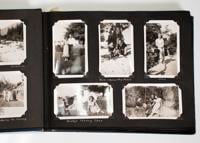
This 1930s photo album for sale at Market Street Antiques in Hillyard is filled with someone's precious memories, but who those smiling faces are remains a mystery.
“That is really where the story comes in,†Wagner says. “We're always scheming different exhibit themes, and sometimes that inspiration can come from a single object.â€
Approximately four-and-a-half hours west, in the heart of Seattle's Chinatown-International District, the Wing Luke Museum focuses on telling a different set of stories.Â
Founded in 1967, the art and history museum's mission is to collect and share the history, culture and experiences of Asian Americans, Native Hawaiians and Pacific Islanders, with a focus on the historic neighborhood where it's located. The museum is named after Seattle politician and attorney Wing Luke, who became the first Asian American to hold elected office in Washington state when he became a member of the Seattle City Council in 1962.Â
After learning about Ittoku Sakoda's Seattle connection and the possibility that his descendants still lived there, I decided to reach out to Wing Luke Museum Collections Manager Steffi Morrison to see if she knew more about the family, or if the dictionary was something the museum might be interested in.
I couldn't believe her reply:Â
“Thanks for reaching out. And what kismet! Earlier this year, we actually accessioned a donation of a 1920s barbershop chair used by both Ittoku and Bob [Shigeru] Sakoda,†Morrison wrote. “The Museum would welcome the donation to the permanent collection, but I believe that Rick Sakoda (Bob's son who lives in Seattle) would enjoy and appreciate the offer and hearing about your story and project. … It's always amazing when seemingly disparate pieces can come together — a dictionary found in an antique store in Spokane connecting to a barbershop chair that was just recently stored in a house in Seattle.â€
A few weeks into the new year, Rick Sakoda and I chatted by phone about his grandfather Ittoku and the Sakoda family's history.Â
Born in Japan in 1886, “Ittoku came to the U.S. in 1904, and was naturalized in 1954,†Rick says. “He was a barber in Hiroshima, Japan, and continued on with a barbershop in Chinatown, Seattle.â€Â
After Executive Order 9066 in February 1942 forced all Japanese Americans living in designated areas of the West Coast to report to short-term detention centers before being sent to one of 10 remote inland camps, father and son Ittoku and Shigeru (who went by the nickname Bob), sold their Weller Street barbershop for $300 to a man of Italian heritage, Rick says. That man kept the business going during their three-year absence, and when Ittoku returned to Seattle after the war, he bought it back for just $300.Â
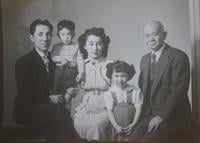
The Sakoda family in the early 1950s, from left: Shigeru (“Bobâ€), Rick, Aiko, Carol and Ittoku.
“I always wish I knew his name,†Rick says of the mysterious benefactor. “I would have loved to thank him.â€
Rick, who's 76, says his parents met and married while they were both interned at Minidoka.Â
“I guess if it wasn't for the internment camp, I wouldn't be here. Or I'd be somewhere else,†he says, laughing.
Until he was about 5 years old, Rick says the whole family — he, his older sister Carol, father Bob, mother Aiko and grandfather Ittoku — lived together in a small area in the back of the barbershop before his parents bought a house on Beacon Hill in 1954.
“It was good memories down there in Chinatown growing up,†he recalls. “We just ran around in the streets,†and elderly residents living above the shop often gave kids loose change to go buy candy.Â
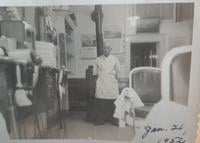
A January 1952 photo of Ittoku Sakoda inside his Weller Street barbershop in Seattle's Chinatown-International District.
Rick's dad took over the business from Ittoku and worked as a barber all his life, eventually moving a single chair into the basement of the family's house, where Rick and his wife still live today.Â
“I was so happy they were able to take it,†he says of that original chair, now in the Wing Luke Museum's permanent collection. “I thought maybe I could sell it to an antique dealer at first, but it's not what it's worth. It's about the memories, and to go to a museum sounds like a better ending for this chair and what it stood for. As far as the [dictionary], I think that goes along with the chair.â€
Rick notes that even after living in the U.S. for decades, Ittoku spoke just enough English to get by.Â
“The one regret that I have about my younger days is that I never learned to speak Japanese,†he says. “And my grandfather didn't speak much English; it was mostly just, here and there, a word or two, but mostly I didn't understand what the heck he was saying.â€
“He was generous with his time,†Rick continues. “He never complained, and he always took me places I wanted to go.â€
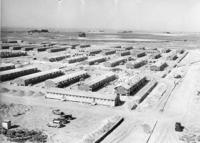
Minidoka detention camp photographed in August 1942, just weeks before Ittoku and Shigeru “Bob†Sakoda arrived there from Seattle.Â
‘YOU CAN'T TAKE IT WITH YOU'
As to how Ittoku's seemingly once essential dictionary ended up in a Spokane antique shop? That's still a mystery. Rick thinks there may be some distant Sakoda family relatives with Spokane connections. It could also just be a coincidence.
When I asked the owners of Tossed & Found, the store it turned up in, they didn't recall anything particularly insightful about its origin, either. They're certain, however, that it was purchased at a local estate sale in late 2025.
“It probably came with other Japanese items that we got from them,†says co-owner Nicki Krossen. “We buy probably 300 things a week,†so it's hard to remember all the details.
Krossen operates the 15-year-old store in the North Monroe Business District alongside business partners Leslie Fleischmann and Darcy Gravelle. While trends may come and go in the wide world of antiques, there always seems to be a buyer for each of the unusual, unique, old, valuable or otherwise interesting items they've tracked down to sell in the store. Uniting these objects with an excited new owner is a constant source of joy and satisfaction for the trio.
“When people buy things, they love what they got, and they are going to give it a whole new life,â€
Fleischmann says. “It used to bother me, too, like ‘Oh, how do I give up my grandmother's bowl?'… But I'd rather it be on somebody's shelf and that they love it, you know? That's how you have to look at it.â€
In the end, that's probably the best outcome any of us can really hope for when it comes time to sort through a lifetime's worth of possessions and decide what we want our most important items' next lives to be.Â
Rather than relying on family members or an estate sale company, making these choices ourselves — as challenging as it may be — so that our intentions are met is something we can control, says fellow antique store owner Campbell, whose 1889 Salvage Co. sits just down the block from Tossed & Found.
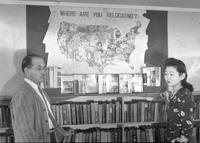
A map in the Minidoka library showed where residents planned to move after being freed from their incarceration at the end of the war in September 1945.
“You have to make a plan,†Campbell says. “You can't say to your second cousin, ‘Here's seven Home Depot totes of family photos,' right? You have to have met with her before and gone through them and told her who they are. And maybe have one box of the ones that need to stay in the family. And that takes a plan.
“What I tell people who are struggling about what to keep and what not to keep is that, if it's not displayed, it's probably not that important,†she adds.
Molly Cole, the estate sale expert, offers similar insight but with a bit more of a reality-check mindset.Â
“I don't know if I'm just used to it because of my job, but like, you can't take it with you,†she says. “That's what I tell people when they're like, ‘should I sell it or not?' — Does it make you happy? Then you should totally hoard it and decorate your house with it or whatever you want to do. But if it's just stressing you out and it's taking up space and you hate it or it's gathering dust, then get it out of your life. Let someone who really wants it appreciate it.â€Â
While my personal keepsakes, family heirlooms, and the other antique or vintage pieces in my collection still invoke joy and pride and a warm sense of nostalgic happiness for days gone by, I felt a sense of peace after hearing all of these experts' advice.Â
Someday, I'll reach out to my grandmother's high school alma mater, for example, and offer to donate her old yearbooks and newspapers. I'll add notes and names (first and last) to old family photos and slowly continue digitizing them. I'll continue wearing (with care) my treasured pieces of vintage clothing. I'll keep browsing for intriguing finds at local shops and researching their pasts as much as I can.Â
I am but a mere steward of these tiny slivers of history. All I can hope to do is keep them safe until they find the hands of their next caretaker.Â
This weekend, one day after this story is published, Will and I are heading to Seattle to officially hand off Ittoku's dictionary to the Wing Luke Museum, where it will be reunited with his original barbershop chair and historic family photos shared by his grandson, Rick. It's a pretty good feeling to know the little book that's seen so much is heading “home,†where it will be properly preserved to share the Sakoda family's amazing story with many generations to come.